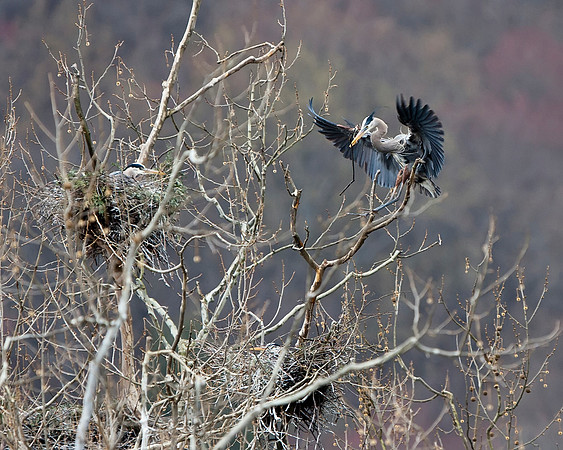
Great Blue Heron
Nest Colony along Sandy Creek, Franklin, PA
The tall, long-legged great blue heron is the most common and largest of North American herons.
Great blue herons are waders, typically seen along coastlines, in marshes, or near the shores of ponds or streams. They are expert fishers. Herons snare their aquatic prey by walking slowly, or standing still for long periods of time and waiting for fish to come within range of their long necks and blade-like bills. Though they are best known as fishers, mice constitute a large part of their diet, and they also eat insects and other small creatures.
Great blue herons' size (3.2 to 4.5 feet) and wide wingspan (5.5 to 6.6 feet) make them a joy to see in flight. They can cruise at some 20 to 30 miles an hour.
Though great blue herons hunt alone, they typically nest in colonies. They prefer tall trees, but sometimes nest in low shrubs. Females produce two to seven eggs, which both parents protect and incubate.
Chicks can survive on their own by about two months of age.